
Colorado Springs
Laser Cavity Treatment
Treating decay precisely — often without the drill.
Overview
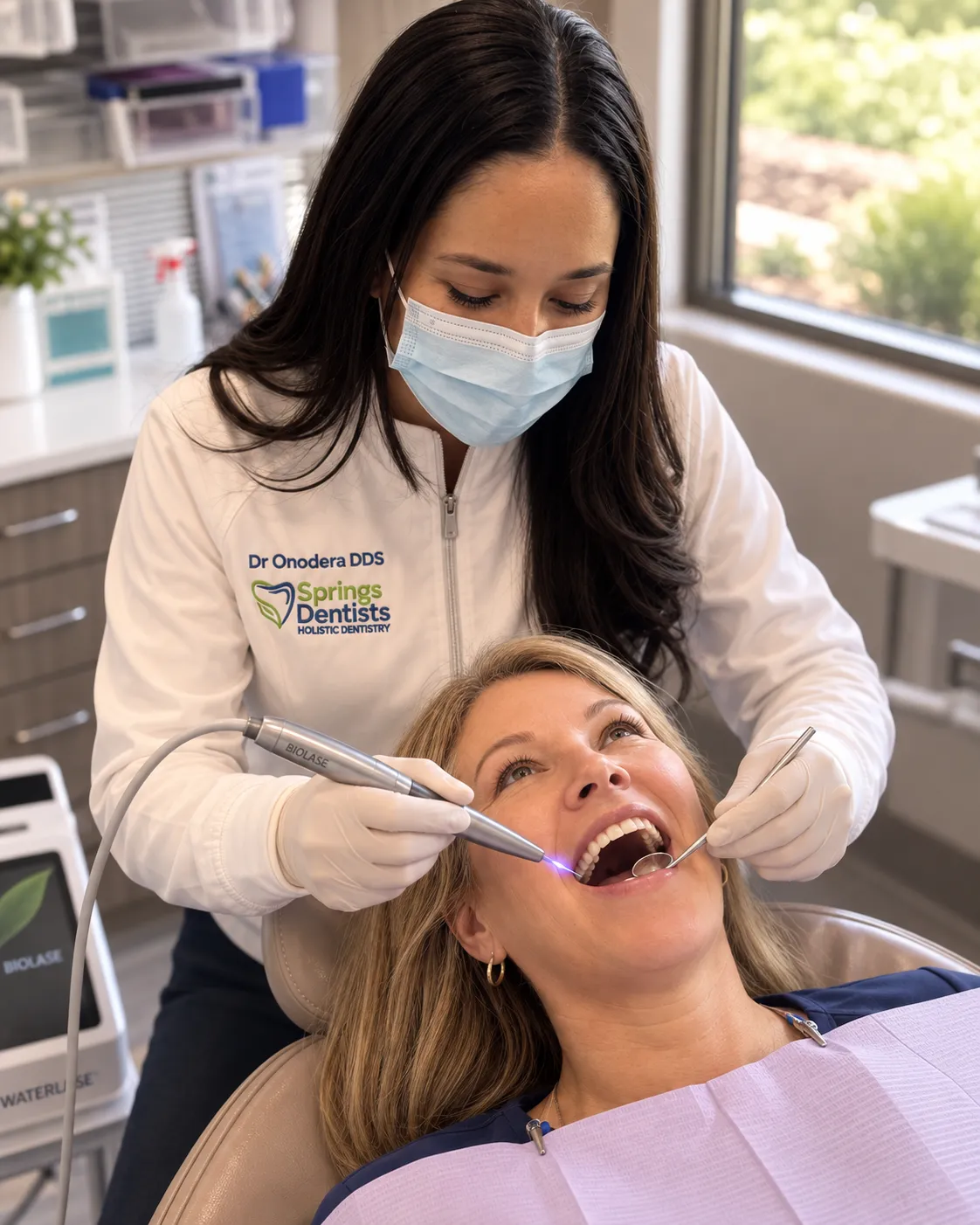
The dental drill is effective. It's also blunt — removing healthy tooth structure along with decay, generating heat and vibration, and typically requiring anesthesia. The Fotona LightWalker laser removes decay differently: precisely, quietly, and in many cases without an injection. The result is a preparation that's smaller, gentler, and faster — and a surface that bonds more effectively.
How laser cavity treatment works
At the wavelength selected for hard tissue treatment, the Fotona laser ablates decayed tooth structure with precision that mechanical drills cannot match. The laser preferentially targets the water content of infected tissue, vaporizing it while leaving surrounding healthy enamel intact. Because there's no friction-generated heat, many patients experience little to no discomfort — and often don't require anesthesia at all. The treated surface also has superior bonding characteristics compared to drilled preparations.
The Holistic Perspective
Less removal, better bonding
Every millimeter of natural tooth structure we preserve is a millimeter that doesn't need to be restored. Laser preparations are smaller and more precise than drill preparations — meaning more of your tooth remains intact. Combined with biomimetic bonding techniques, this produces a restoration that integrates with the natural tooth more effectively and lasts longer. The laser also sterilizes the preparation as it works, eliminating the bacteria that conventional drilling leaves behind.
Who This Is For
- Patients who experience anxiety around the dental drill
- Those with small to moderate cavities where drilling might be avoided
- Anyone who has had negative reactions to dental anesthesia
- Patients who want the most conservative, tooth-preserving approach to treating decay
Before You Schedule
Not every cavity can be treated without a drill — some preparations require mechanical instrumentation. But in many cases, the laser is the better option. We'll tell you honestly which approach is right for your situation.
Common Questions
Frequently asked questions about laser cavity treatment in Colorado Springs
Can all cavities be treated with a laser instead of a drill?
Not all. Shallow to moderate cavities in enamel and early dentin are often well-suited to laser treatment. Deep cavities, certain anatomical locations, and some preparation shapes may still require a drill. We always use whichever approach is best for your specific situation.
Will I need an injection for laser cavity treatment?
Often not. Many patients find laser treatment comfortable without any anesthesia at all. We discuss this before starting and can always provide numbing if you prefer — the option is always yours.
Is laser cavity treatment faster than traditional drilling?
For small lesions, it can be faster. For larger preparations, the time is comparable. The main advantages over drilling are precision, absence of vibration, superior comfort, and better bonding characteristics on the prepared surface.
Does laser cavity treatment cost more?
There may be a modest additional fee associated with laser treatment. We discuss all costs transparently before beginning any procedure — no surprises.
Is dental laser treatment proven safe?
Yes. The Fotona LightWalker and similar hard-tissue dental lasers have been FDA-cleared and used safely in clinical dentistry for decades. We follow all established safety protocols, including protective eyewear for patients and the team.
Ready to Get Started?
Your first visit begins with a conversation.
No pressure. No procedure lists. Just an honest conversation about your health and what matters to you.