
Colorado Springs
Inlays & Onlays
The most conservative path to a strong restoration.
Overview
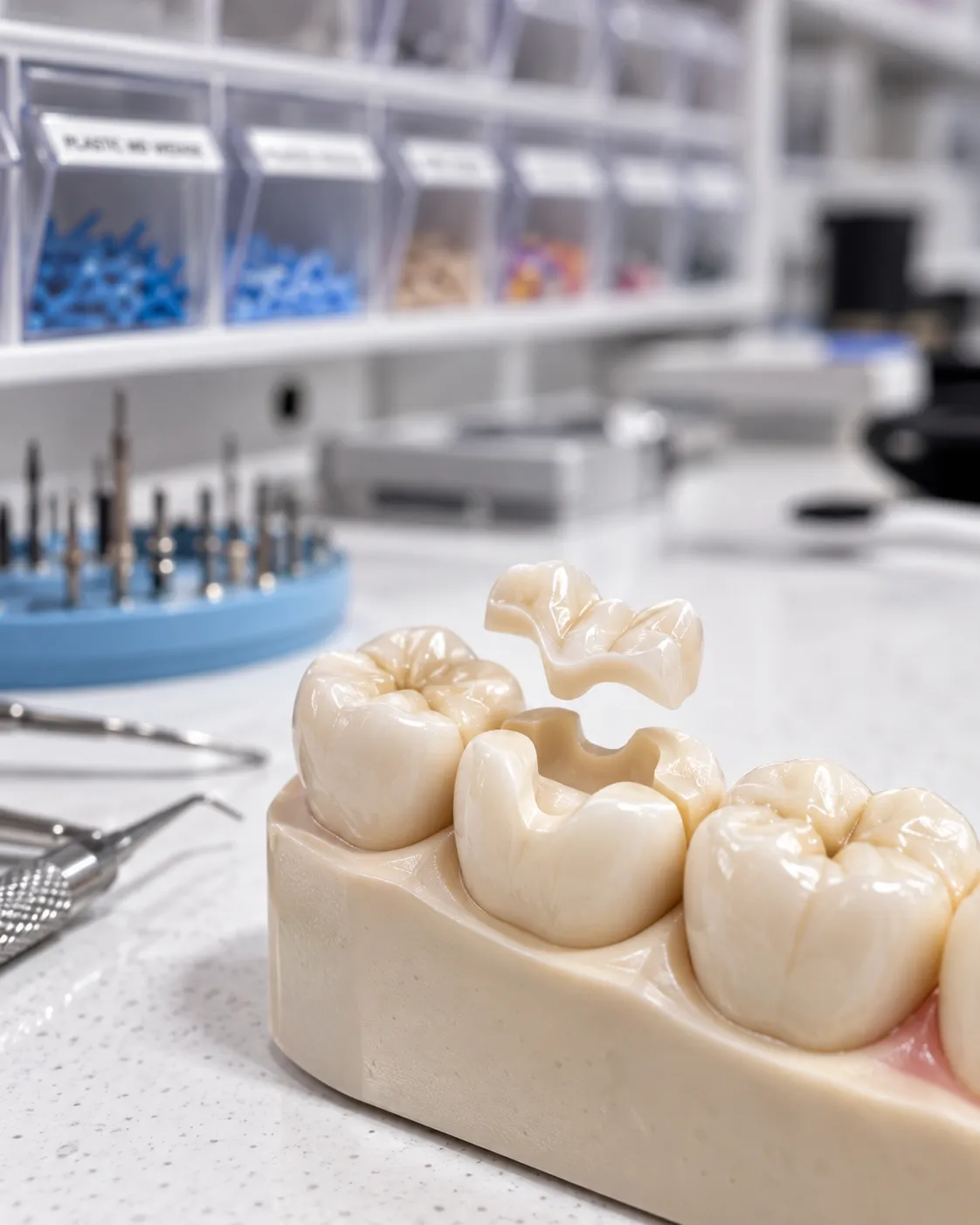
When a cavity is too large for a simple filling but doesn't require a full crown, an inlay or onlay is often the ideal solution. These lab-fabricated porcelain restorations fit precisely into or over the prepared tooth — requiring significantly less tooth reduction than a crown — and are adhesively bonded for strength that rivals and often exceeds conventional alternatives.
Inlays vs. onlays vs. crowns
An inlay fits within the cusps of a tooth — essentially a precisely fitted porcelain puzzle piece. An onlay covers one or more cusps in addition to filling the interior. Both require far less tooth removal than a crown and preserve the structural integrity of the remaining tooth. Because they're bonded rather than cemented, they strengthen the tooth rather than creating the stress that full crowns can impose. Fabricated by a skilled ceramist and matched to your natural tooth color, they're virtually invisible.
The Holistic Perspective
Conservation and longevity
The more healthy tooth structure we preserve, the better the long-term outcome. An inlay or onlay that conserves 60% of the natural tooth is fundamentally different from a crown that removes 70% of it. Biomimetic bonding applied to inlays and onlays produces restorations that transfer stress naturally, reduce sensitivity, and prevent the fractures that ultimately lead to tooth loss. Recommending an inlay or onlay over a crown whenever possible isn't a cost-cutting measure — it's the right clinical decision.
Who This Is For
- Patients with cavities too large for a direct composite filling
- Those with old, failing metal inlays they want replaced with tooth-colored alternatives
- Anyone seeking to avoid a crown through a more conservative option
- Patients with a cracked tooth where the fracture doesn't extend to the root
Before You Schedule
Not every compromised tooth needs a crown. At your evaluation, we'll show you exactly what we see and give you our honest recommendation — which is often more conservative than what you might hear elsewhere.
Common Questions
Frequently asked questions about inlays & onlays in Colorado Springs
What is the difference between an inlay and an onlay?
An inlay fits within the cusps of the tooth — essentially a precisely fitted porcelain puzzle piece filling the interior. An onlay extends beyond the cusps to cover one or more of them. Both are more conservative than a full crown and are adhesively bonded for superior strength.
How long does an inlay or onlay procedure take?
Typically two appointments: one for preparation and digital scanning or impressions, and a second to bond the finished piece. Total chair time is usually 2–3 hours combined, and temporaries protect the tooth between appointments.
How long do porcelain inlays and onlays last?
With proper care, 15–30 years is realistic. Because they're adhesively bonded and restore natural biomechanics rather than stressing the remaining tooth, they often outlast traditionally cemented crowns.
Will an inlay or onlay look natural?
Yes. They're custom-fabricated from tooth-colored porcelain by a skilled ceramist and matched to the shade of your adjacent teeth. Most patients — and their family members — can't identify which tooth was restored.
Can an old metal inlay be replaced with a porcelain one?
Absolutely, and this is a common request. Old metal inlays are safely removed and replaced with adhesively bonded porcelain — improving both aesthetics and biocompatibility in a single appointment sequence.
Ready to Get Started?
Your first visit begins with a conversation.
No pressure. No procedure lists. Just an honest conversation about your health and what matters to you.